

What is kapok?
This fiber is a hollow plant fiber derived from the kapok fruit. It is also known as plant down. The plant grows primarily in the forested regions of Asia, and it is also harvested in Latin America and some African countries. The fiber from the kapok tree has a smooth structure and a very thin cell wall. On average, it is 19 mm long and has an air content of 80%. This makes the hollow textile fiber extremely light. It can support a weight approximately 30 times greater than its own weight.
The tree grows to a maximum height of 50 meters and produces up to 20 kilograms of material annually. The harvested fiber envelops the seed and is thus similar to cotton. The large air pockets make the fiber one of the lightest plant-based fibers in the world. This makes it not only breathable but also insulating. In addition, the fiber is surrounded by a waxy coating that has a water-repellent effect.
If you’re thinking of buying a kapok pillow, it’s worth taking a look at the detailed properties and benefits of this natural fiber. Kapok filling is ideal for use as padding, whether in kapok blankets or other bedding, upholstered furniture, or flotation devices. Moisture regulation and thermal insulation are key factors for sleep comfort. Both properties are directly related to the air pockets within the hollow fibers of the kapok tree.
How are the fibers made?
The trees are grown primarily in Africa and Asia. The seeds contain 25% oil. This makes the plant suitable not only for the production of filler fiber but also as a source of seed oil.
As a natural, renewable resource, the plant is highly productive. In addition to wild-growing plants, the kapok tree is now cultivated on a somewhat larger scale. Fertilizers and pesticides are just as unnecessary as the use of chemical processes. When purchasing a kapok blanket, it’s worth ensuring that the material is sourced under fair conditions. This includes environmentally friendly cultivation that preserves the trees. These valuable trees remain intact for many years and yield approximately 20 kg of fibers annually.
To protect the ecosystem, workers pick the capsules by hand or carefully knock them down with poles. The capsules are then left to dry in the sun. To separate the fibers from the seeds, the fruits are placed in a blower chamber. No cleaning or chemical treatment is required, as the fibers are used in their natural form. These are silky, lustrous plant fibers covered in a thin waxy layer. The water-repellent properties of this layer are particularly important for the fabric’s breathability. While the fibers cannot be spun, kapok fibers offer other advantages.
These fibers make an ideal filling for kapok blankets and pillows. Typically, the natural filling is placed inside a quilted pillow cover. Here, too, the focus is on precise and sustainable manufacturing.
-
from CHF 244.30 Select a model This product is available in several versions. You can select your preferred option on the product page.
-
from CHF 99.00 Select a model This product is available in several versions. You can select your preferred option on the product page.
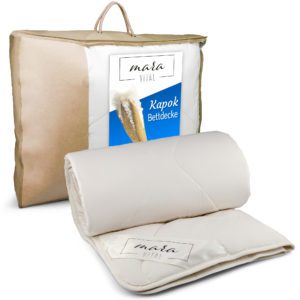
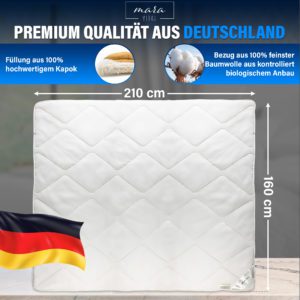
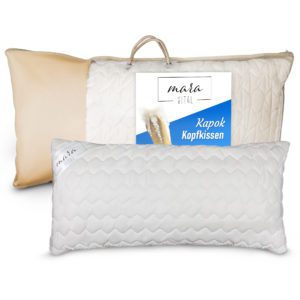
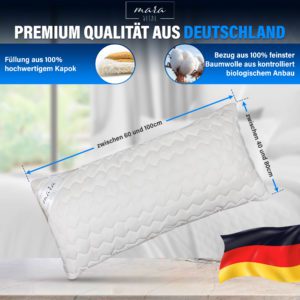
Historical Background
In the 1930s, the fiber was in high demand for life jackets and similar safety products due to its buoyancy in water. The particularly large air pockets prevented it from sinking. This advantage still appeals to many water sports enthusiasts today. Sailors, in particular, use the classic floatation cushions. Until the mid-20th century, the fiber was also used for upholstery fillings. However, synthetic materials were increasingly used as fillers. Among other things, foam replaced the fiber.
In recent years, this natural fiber has regained popularity. It has proven itself to be a lightweight and insulating filling material for upholstered furniture and bedding. When you buy a kapok pillow, you benefit from its natural quality. The filling is often made entirely of kapok fiber, but there are now also many products that feature a kapok-cotton blend.
Thanks to its unique properties—lightweight and excellent insulation—this natural fiber has once again proven itself superior to other filling materials. Bedding items, such as mattresses, pillows, and warm comforters, are particularly noteworthy. In addition, there is still a wide range of upholstered furniture filled with this material. This special fiber is suitable for many applications. It meets the needs of sensitive individuals and those with allergies, creating a pleasant environment in the bedroom. The comfort in bed leaves nothing to be desired: so it’s definitely worth buying a kapok comforter.
General Benefits
- Water-repellent structure – Kapok bedding does not provide a breeding ground for fungi and germs and keeps moths and dust mites at bay.
- Highly durable – the fiber contains 20% lignin, a stable compound found in wood, among other things.
- Low cellulose content – prevents infestations by mites and fungi.
- Breathable and voluminous—kapok bedding effectively keeps out the cold and helps regulate moisture.

How does kapok bedding affect my sleep?
The duvets and pillows filled with natural kapok are pleasantly soft and do not absorb moisture. At the same time, they are lightweight, ensuring a high level of sleeping comfort. This sets kapok duvets and pillows apart from many other bedding items with plant-based fillings. If you’re looking for a breathable duvet with a soft, cozy feel and good temperature regulation, you should consider buying a kapok duvet. It is extremely lightweight yet beautifully fluffy.
Thanks to its optimal insulation, the duvet easily compensates for even significant temperature fluctuations. Yet sleepers don’t feel any heat buildup, as the pleasantly dry material allows the skin to breathe. Nighttime sweat is wicked away through the moisture-wicking duvet, keeping the body dry. This leads to a restful night’s sleep.
Those who toss and turn frequently while sleeping won’t be bothered by the lightweight duvet. It allows you to relax comfortably without feeling weighed down. This way, you don’t feel restricted but can move freely. Consequently, you’ll fall back asleep more quickly after a brief awakening.
The fact that natural fibers are environmentally friendly is another reassuring factor. This is especially true for products made from sustainably sourced materials. Protection against dust mites, mold, and moths is also beneficial for a good night’s sleep. This makes kapok comforters suitable for people with allergies as well.
Features
- A buoyant, water-repellent fiber—wicks away moisture, improves breathability, and regulates body temperature at the same time.
- Warming in winter, cooling in summer.
- Good self-cleaning properties – no washing required; airing it out is usually sufficient for hygienic care.
- Sustainable and eco-friendly—controlled cultivation ensures that the manual harvest is carried out under fair conditions. The absence of fertilizers enhances the quality.
- Customizable filling – the zippered inner lining allows you to remove or add more kapok filling.
Care Instructions for Kapok Pillows and Blankets
To clean this type of stuffed bedding, it is generally sufficient to thoroughly fluff the pillows and blankets and turn them regularly. In addition, direct sunlight activates the self-cleaning properties of the natural filling in the blankets and pillows.
Washing could destroy the natural fibers’ bitter compounds if the filling consists of 100% kapok fiber.
However, with a blend of one-third kapok fiber and two-thirds cotton, the item can be washed at temperatures up to 60 degrees. Afterward, machine drying ensures that the fiber regains its volume.


