
What is virgin wool?
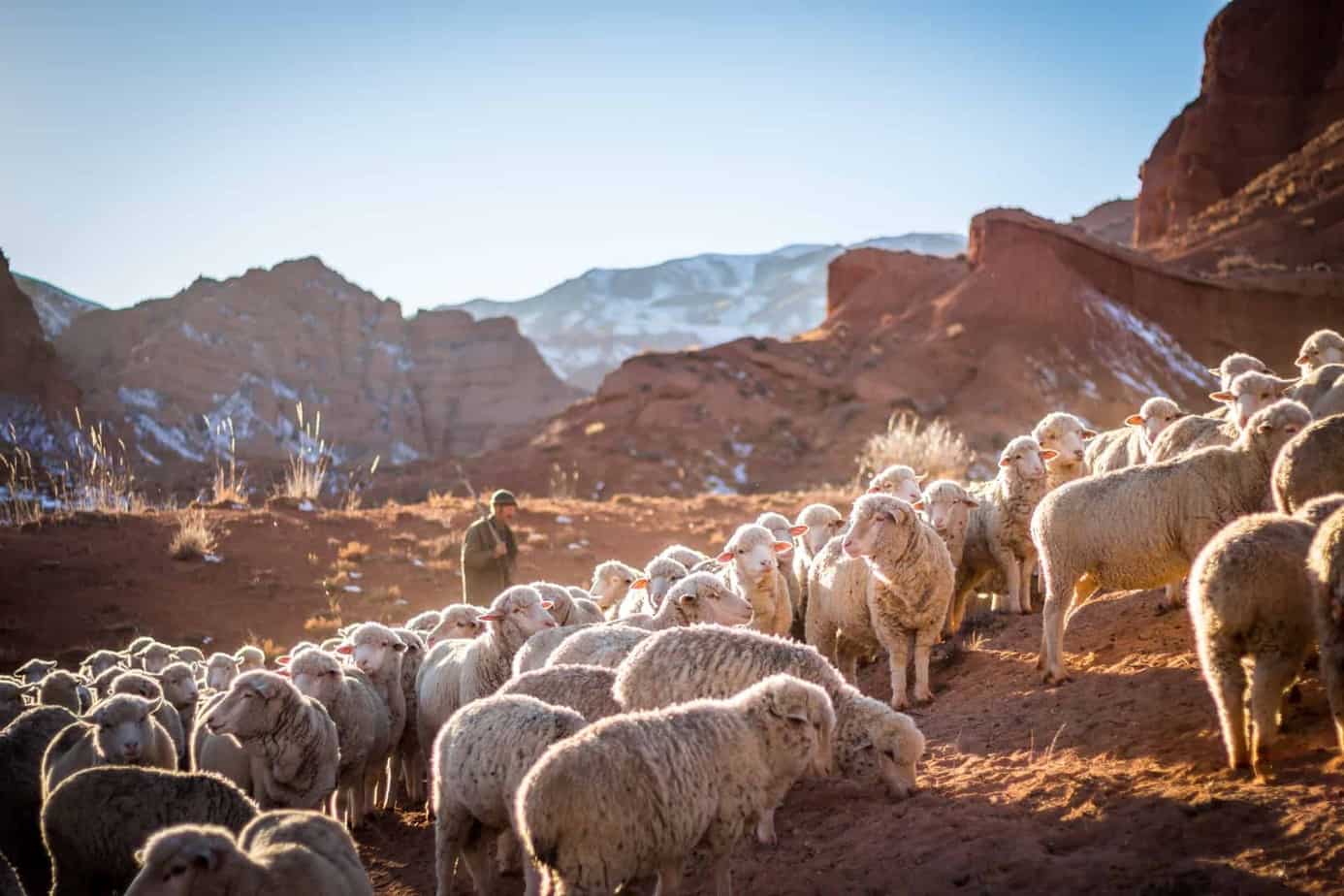
The term “virgin wool” refers to wool freshly shorn from live sheep. Because it is freshly harvested, it is of particularly high quality. Sheep are typically shorn in the spring or early summer, as the wool then develops stronger and longer fibers and is easy to process. Only wool that is 100% obtained from the shearing of live sheep may be designated as pure virgin wool. Wool derived from the recycling of old textiles, on the other hand, is called recycled wool. Wool from slaughtered or naturally deceased animals is referred to as tanner’s wool or deadstock wool.
With 130 million animals, Australia tops the list of wool exporters. However, particularly in Australia and New Zealand, animal husbandry practices that have been heavily criticized by animal welfare groups—and are banned in Germany—have become established. In a practice known as “museling,” skin is removed from the anus of young animals—usually without anesthesia—to protect them from insect infestation. Shearing is also often carried out in a very cruel manner. Therefore, it is advisable to always check the origin of the wool when purchasing wool products.
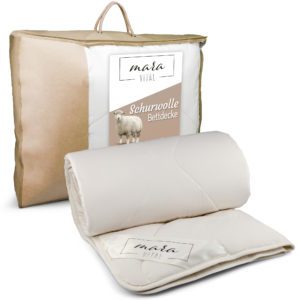
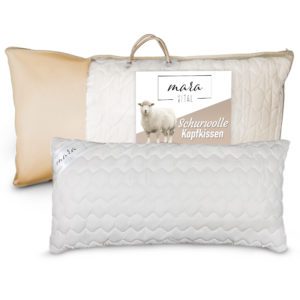
As long as they bear the appropriate certification, our blankets and pillows are safe to purchase. Thanks to its practical properties, sheep’s wool is not only suitable for socks but is also used in many other applications, such as functional underwear, virgin wool blankets, and virgin wool pillows. This is because the fibers have excellent moisture-regulating properties due to their structure; they are odor-neutral and easy to care for. The fibers are flame-resistant and are therefore frequently used as insulation material and in covers.
How are virgin wool products made?
Depending on the breed of sheep and the part of the body where the fibers come from, there can be significant differences in wool quality, which are also reflected in the price. When shearing the sheep, care is taken to ensure that as large a continuous fleece as possible is obtained. The actual wool is then obtained from the inner hairs. The raw material is subsequently cleaned to remove all dirt particles and other impurities. The wool is then sorted according to color and quality.
Finally, the wool goes into the carding machine. During carding, the virgin wool is loosened and combed so that the fibers all lie parallel to one another. In the resulting carded slivers, the wool is now sorted and bundled and is ideally suited for further processing in this form. The material is also dyed during this stage of production. The dyed slivers are then sent to the spinning mill. During spinning, the fibers are drawn out, causing them to pull tightly together and twist, resulting in a strong yarn that is many meters long.
Depending on the spinning method, a wide variety of yarns can be produced, each suitable for different products depending on its quality. The wool yarn is then processed into the respective end products or can be purchased as a ball of yarn to be used for knitting, crocheting, or other handicrafts.
-
from CHF 202.30 Select a model This product is available in several versions. You can select your preferred option on the product page.
-
from CHF 94.90 Select a model This product is available in several versions. You can select your preferred option on the product page.

Historical Background of Virgin Wool
Virgin wool is one of the oldest natural materials used in the production of textiles. However, to make the sheep’s wool usable, the animals underwent a long breeding process. Selective breeding was carried out so that the long outer coat receded in favor of the undercoat, and the annual molting ceased. This allowed the wool of the sheep to grow until it could be harvested by humans through shearing.
The earliest evidence of the presence of wool sheep (alongside hair sheep) comes from the Near East and dates back to the 6th and 5th millennia BCE. As early as the 4th millennium BCE, wool sheep were also found outside Mesopotamia, and from the 3rd millennium BCE onward, wool sheep also appeared in Central Europe. Gradually, wool replaced plant fibers (especially flax) in textile production.
There is evidence of blended fabrics made from wool and plant fibers that can be found among the Celts, the Germanic peoples, the Greeks, and during the Roman era. It seems that even back then, people appreciated the material’s beneficial properties. Nothing has changed in this regard to this day, and wool is frequently used in applications where textiles must withstand particularly demanding conditions.
Specialized technical clothing for freezing weather and wool socks for hiking are very popular. You can also buy warm coats and virgin wool blankets, and these are just a few examples. Today, wool is an indispensable part of handicrafts, and there are countless ways to work with the yarn at home. Hobbies such as knitting, felting, and crocheting are widespread.
General Benefits of Virgin Wool
- Durability: Products made of pure wool are very durable in terms of material, shape, and color, and require less care than synthetic fibers.
- Good value for money: If you’re looking to buy a virgin wool pillow, you’ll get a product that will last for years and won’t wear out quickly or need to be replaced.
- Versatility: Whether in athletic wear or in virgin wool pillows and blankets, this material is highly suitable for everyday use.
- Easy to clean: Since wool is practically self-cleaning, there’s no need for complicated washing and drying in a washing machine and dryer, and you can also avoid costly professional cleaning. The best way to care for the blanket is simply to air it out outdoors when the humidity is high.
How does a virgin wool pillow affect my sleep?
Thanks to its natural thermoregulatory properties, a virgin wool blanket is a worthwhile purchase any time of year. In winter, the material provides natural warmth and retains body heat without causing overheating. Excess heat is reliably released into the surrounding environment, ensuring an ideal sleeping temperature at all times.
The moisture-regulating properties of a virgin wool blanket also come into play when you sleep. Because the fibers can absorb a large amount of moisture, night sweats are no longer a problem. The wool fibers in the blanket efficiently store the moisture and release it into the environment as water vapor. Your skin stays dry even while you sleep, and your sleep isn’t disturbed. This ensures a comfortable sleeping environment, regardless of the season or your personal sleeping habits.
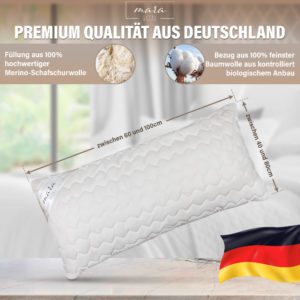
We spend several hours in bed every night, yet we don’t change and wash our blankets and pillows as often as we do our clothes. Anyone looking to buy a virgin wool pillow will quickly be won over by its odor-neutralizing properties. Despite daily contact with sweat and oils, the pillow stays fresh and doesn’t absorb odors, thanks to its odor-neutralizing fibers. There’s no need for complicated cleaning or long drying times, because simply airing them out supports the self-cleaning properties of the blanket and pillow, and both are quickly ready for use again.
Features
- Water- and dirt-repellent: Thanks to a high wool fat content, water, sweat, and dirt do not cling to the fibers.
- Odor-neutral: Odors from sweat and dirt aren't absorbed in the first place and are quickly released into the surrounding air.
- Temperature-regulating: in winter, the material provides extra warmth; in summer, it keeps you cool and reliably wicks body heat away.
- Moisture-regulating: The fibers can absorb one-third of their own weight in moisture without feeling damp. The moisture is released as water vapor, keeping the skin dry.
- Sustainable: It is a renewable raw material that is very durable. Both its shape and color remain intact for a long time, and the fibers are flame-resistant.
Care Instructions for Our Virgin Wool Products
- Care: It is usually sufficient to air out the blanket and pillows regularly in the fresh air.
- Heavy soiling: This is best removed by hand washing with a wool detergent, for example in the bathtub. Avoid machine washing, as wool tends to felt. Do not use fabric softener.
- Temperature: Excessively high temperatures can also damage the material. A water temperature of 30°C is perfectly adequate, and you should avoid using a dryer.
- Drying: Neither the dryer nor wringing out the fabric is recommended. Instead, depending on the item, it’s best to blot away moisture with a terry cloth towel and let the rest air dry.


