
What is the hemp plant?
It has been one of the most important crops in Europe for thousands of years. Botanically speaking, it belongs to a genus within the hemp family. It is typically an annual herbaceous plant that can grow to very different heights depending on environmental conditions.
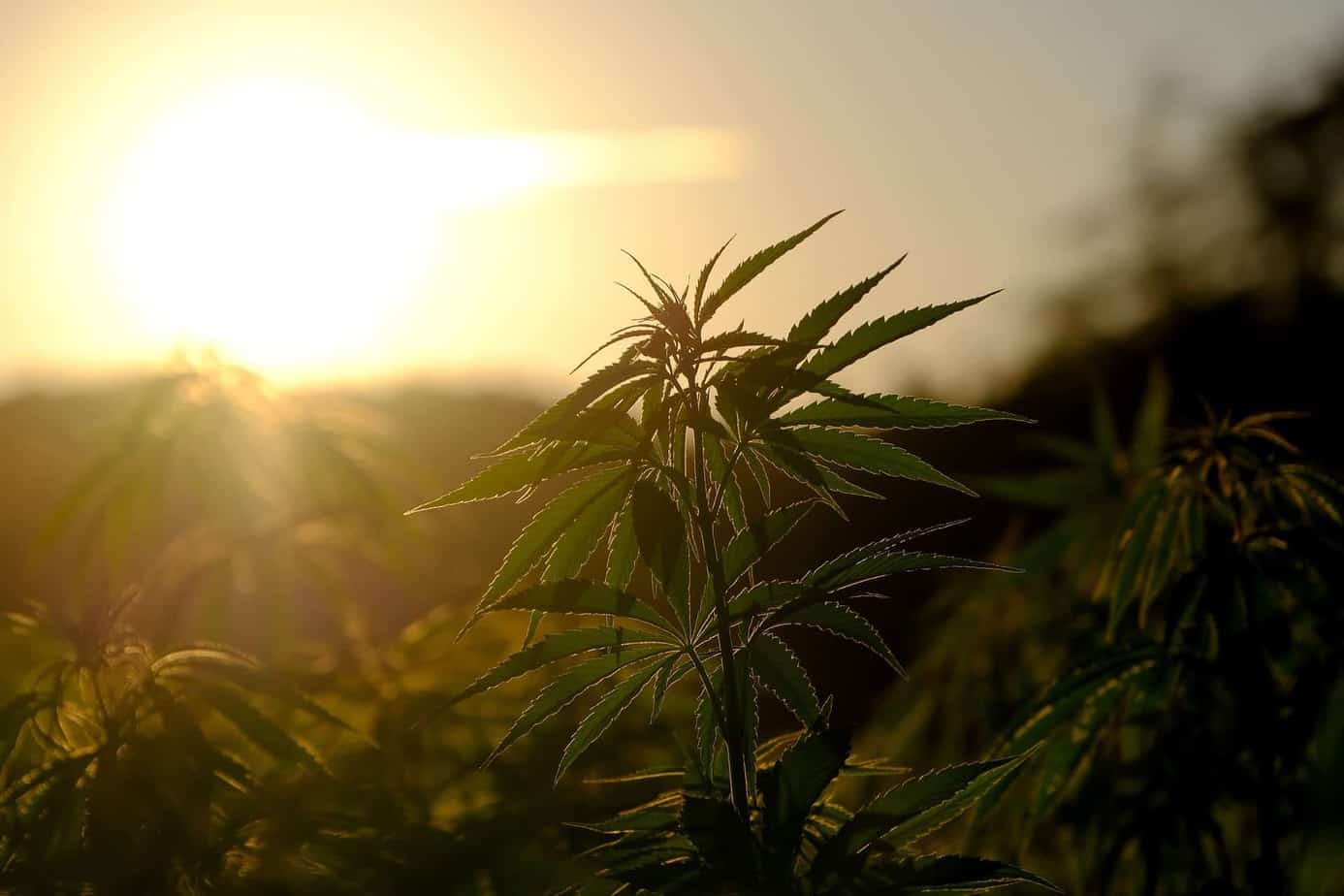
As a wild plant, it reaches a maximum height of three meters. When grown in optimal conditions—such as moist soil with sufficient nutrients—the cultivated plant can reach a height of up to six meters. The plant usually withers in waterlogged conditions, although it is otherwise very hardy. In appearance, it most closely resembles a small palm tree; its leaves are palmately compound, and the leaf margins are serrated, similar to a saw blade. The structure of the leaves is also quite unique: the first leaves usually have only one leaflet, while subsequent leaves have up to 13 leaflets.
When the plant flowers, the number of leaflets decreases to just one. In some species, male and female flowers typically grow on separate plants. However, there are also plants that have both male and female flowers. Nearly all parts of the plant can be utilized (fibers, leaves, flowers, seeds) and are processed into ropes, oil, essential oil, dietary supplements, teas, etc. It also plays an important role in the textile industry and the alternative medicine sector.
How are hemp fibers produced?
Its fibers are true all-rounders and are used today in many fields as a renewable, eco-friendly raw material. In fact, it is the strongest natural fiber. Due to its durability and hypoallergenic properties, it is also increasingly used in home textiles, such as blankets and pillows. The use of these fibers dates back to around 2800 B.C. In the plant’s stem, multiple fibers are arranged in layers on top of one another. They consist of bast fiber cells that are bound together to varying degrees by pectin substances, allowing a fiber bundle to reach a total length of one to three meters.
Female and male plants differ in the quality of their fibers. While the female plant has a longer growing season and features thicker, sturdier cells, the fibers of male plants are finer and more delicate and can be processed into high-quality fabrics. Both types of fibers can also be combined to produce a medium-quality fabric. Moderncommercial varieties contain between 30% and 40% fiber content. Depending on the plant’s stage of maturity, the fibers consist of 60%–70% cellulose and 10%–20% hemicellulose.
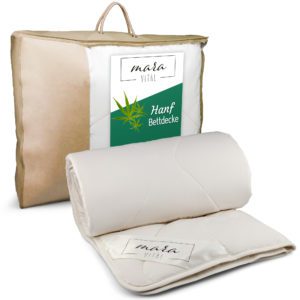
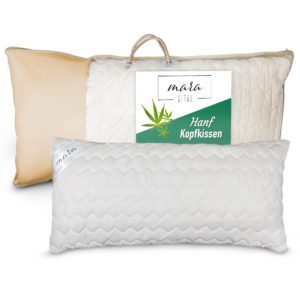
Harvesting for fiber production typically takes place during the flowering period of the male plant. By breaking off and rolling the stems, the fiber is separated from the rest of the plant—a process known in technical jargon as “fiber separation.” A distinction is made between long-fiber separation, the traditional method, and short-fiber separation, a more cost-effective alternative. After harvesting, the fibers are further processed or refined depending on their intended use and are found in hemp pillows or hemp blankets.
-
from CHF 209.30 Select a model This product is available in several versions. You can select your preferred option on the product page.
-
from CHF 99.00 Select a model This product is available in several versions. You can select your preferred option on the product page.
Historical Background of Hemp Fibers
The history of the plant dates back several millennia. The earliest findings, dating to around 4000 B.C., come from China, where ropes were first made from the plant’s fibers. By the 9th century B.C., the plant had also spread to West Asia and India. Near Ankara, the remains of textiles made from these fibers were found, dating back to the 8th century B.C.
Around the 3rd century B.C., the plant found its way to Italy and thus to Europe, where it was used in tanning and similar products. In the late Middle Ages, the center of cultivation for the plant was located in what are now Russia, Poland, northern Germany, and the Netherlands, as well as in Burgundy and Brittany. The plant had an advantage over flax, which was also very widespread at the time: it was easier to process than flax.
Because of the fiber’s robust and durable properties, it was used in many different fields. Some medieval weapons, such as the longbow—whose strings were made of hemp—could not have been made without this fiber, which can withstand enormous tensile forces.
In Spain, the process of making paper from these fibers was invented in the 13th century, although early findings from China suggest that the Chinese were already using this method as early as 140 B.C. At that time, wood was not yet an option for papermaking. The method of making paper from hemp made its way from Spain to Germany. Finally, the first hemp paper mill was built in Nuremberg in 1290, and Gutenberg printed his world-famous Gutenberg Bible on hemp paper in 1455. The plant also made it across the Atlantic: the American Declaration of Independence of 1776 was printed on hemp paper.
Unfortunately, the advent ofcotton spinning machines in the 19th century brought an end to the use of the hemp plant as a textile fiber. Ultimately, its cultivation in Germany was completely banned between 1982 and 1995 under the Narcotics Act, in an effort to curb the abuse of cannabis as a recreational drug and a gateway drug. This occurred even though industrial hemp is safe to cultivate due to its virtually non-existent THC content. Other countries followed Germany’s lead, but there were also many countries that continued to cultivate the plant, including the former Soviet Union and France.
In the 1990s, industry and the agricultural sector finally began to show growing interest in the plant as a valuable, renewable raw material, until the ban was finally lifted entirely in Germany in 1996. Today, the cultivation of low-THC varieties is permitted in all European countries; only in the U.S. is it still illegal. Yet the outlook for cultivation is promising: Experts predict that cultivation will increase to approximately 20,000 hectares across Europe due to rising demand for hemp-fiber-reinforced materials and insulation, as well as price increases for other fibers imported from overseas.
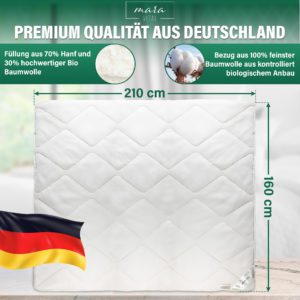
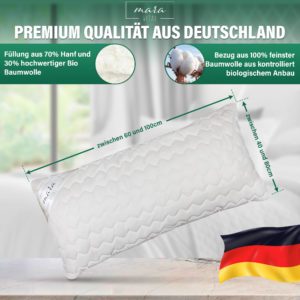
Thanks to their unique properties, these fibers are making a comeback in the textile industry as well. Hemp pillows and hemp comforters are growing in popularity. The filling made from these fibers has a low tendency to rot, is completely harmless to health, and is highly resistant to pests. So you’re making the right choice when you buy a hemp pillow or a hemp blanket.
General Benefits of Hemp
In addition to the fibers, the leaves, flowers, and seeds of this industrial plant can also be processed. The range of possible products is virtually limitless. They can be used to produce insulation and lightweight panels, textiles, oil, juice, teas, dietary supplements, and fillings for bedding. Their fibers are also ideal as fuel in the form of pellets, as they have the same calorific value as charcoal but absorb an enormous amount of CO2 during the growth process, thereby helping to prevent global warming.
- Rapid growth: The plant grows at an incredible rate—up to 5 meters in 120 days.
- Pest-resistant: It requires no pesticides whatsoever, as it is highly resistant to pests of all kinds and is therefore free of agricultural chemicals; it is also unsuitable for rodents to build nests in.
- High utilization rate: 97% of the plant can be processed.
- Excellent carbon footprint: the plant absorbs more CO2 than our forests and requires very little energy to produce.
- Hardiness:It is long-lived and can be grown successfully almost anywhere.
- Flame-resistant: Hemp fiber is classified as fire resistance class B1 because it is highly flame-resistant.

How does a hemp pillow affect my sleep?
Hemp fiber is ideal for use as filling in pillows and blankets because its moisture-regulating properties create an optimal sleeping environment by absorbing and releasing sweat. The fiber is also antistatic, which means that hemp blankets and pillows are highly dust-repellent—a benefit especially for those with dust mite allergies.
In addition, it is free of pesticides and agricultural chemicals, as it is highly resistant to pests and does not require them. Furthermore, it retains about as much heat as virgin sheep’s wool, yet it is a rapidly renewable natural product. Hemp fiber also stands out because it is machine washable at 60°C and because hemp pillows or blankets contain absolutely no animal fibers, making them vegan. Combined with a high-quality cover made of organic cotton for your hemp pillow or blanket, it ensures a restful, peaceful, and healthy sleep experience.
Buying a hemp pillow or a hemp blanket has never been easier than it is today, as they are becoming increasingly popular.
Features
- Tear-resistant and durable: This natural fiber is incredibly tear-resistant and durable, making it a versatile material.
- Breathable: Its fibers absorb moisture and gradually release it back into the environment—making it perfect as insulation or as a filling in home textiles for a healthy night’s sleep.
- Breathable:They allow air to circulate, ensuring an optimal sleeping environment.
- Water-repellent: It is water-repellent, which prevents moisture buildup and, consequently, mold growth.
- Protection from UV radiation: Hemp fibers absorb up to 90% of UV radiation
- Antibacterial properties: They have antibacterial effects.
Care Instructions for Our Hemp Products
If you wash your blanket or pillow in the washing machine, be sure to use liquid detergent, as powdered detergent may get trapped in the fine fibers if it doesn’t dissolve completely. In addition, you should not wash them at temperatures above 60°C and should only air-dry them, as they are not suitable for the dryer. The ideal place to dry them is on a clothesline in the fresh air.


