
Which filling is right for you? Natural materials for duvets and pillows
The right filling depends on your needs: If you sweat easily, you need a blanket with less insulation; if you feel the cold, you need one with a higher warmth rating. If you have a dust mite allergy, look for dust-mite-proof covers and materials that can be washed at 60 °C. Natural options include kapok, hemp, and Lyocell.

In short
- The warmth rating matters: The same filling is available in both summer and winter versions. According to Stiftung Warentest, warmth ratings are not uniformly defined.
- Animal hair or plant: Alpaca, camel hair, and virgin wool are animal hairs; kapok and hemp are plant fibers; and Lyocell is a cellulose fiber made from wood.
- If you tend to sweat, choose either the Lyocell blanket (400 g per square meter) or the alpaca blanket (190 g per square meter).
- Wash according to the product: The hemp and Lyocell blankets can be washed at 60 °C, while the virgin wool blanket is usually just aired out.
Which filling is best for which need?
If you tend to sweat easily, choose a lightweight duvet made of Lyocell or alpaca; if you tend to feel cold, choose a winter comforter in warmth class 4 made of alpaca or virgin wool with Swiss stone pine. Find the one that suits your needs:
- You sweat easily: A lightweight blanket: the 400-gram Lyocell blanket as a summer blanket, or the 190-gram-per-square-meter alpaca blanket. Learn more in the section “If you sweat at night.”
- You get cold easily: Choose a winter blanket in warmth class 4, such as the alpaca blanket or the Swiss stone pine blanket made of virgin wool, each weighing 500 g per square meter. The camel hair blanket is also available as a winter blanket. See the “Season” section for more information.
- You have a dust mite allergy: First comes the cover, then the filling. The aha! Allergy Center Switzerland recommends dust-mite-proof covers (encasings) for mattresses, pillows, and comforters, regardless of the filling, and advises washing pillows and comforters at least once a month at a minimum temperature of 60 °C. Your duvet is covered by the Mara Vital allergy-friendly duvet cover: according to the product page, it’s dust-mite-proof, washable up to 95 °C, and certified to the Oeko-Tex Standard 100. The website does not specify the allergy certification recommended by the center. The hemp blanket, the Lyocell blanket, and the Rubin down blanket can all withstand 60 °C. According to the product page, the cover of the Rubin pillow bears the “Dust Mite Barrier & Cotton” seal. Learn more about encasings in the Mattress Protector Guide.
- You have a reaction to wool or animal hair: According to a review article on clothing, the wool fiber itself is not a skin allergen; however, 3.3% of those tested reacted to wool grease (lanolin) in skin tests. What this means for each type of fiber is explained under “Allergies to Virgin Wool, Alpaca, and Camel Hair.” The next section lists blankets that contain no animal hair at all.
- If you want to sleep vegan, choose kapok, hemp, or Lyocell—all three are plant-based. Kapok, hemp, and Lyocell blankets contain no animal hair.
- If you want low-maintenance care: The hemp blanket and the Rubin down blanket can be machine-washed at 60 °C, the Lyocell blanket at up to 60 °C, and the kapok blanket at 40 °C. The care instructions for each product are listed in the care chart.
- If you like natural scents: the Swiss stone pine blanket or pillow, made with virgin wool and Swiss stone pine shavings. The scent is a matter of personal preference. There is no evidence that it improves sleep: see “Swiss stone pine” for more information.
- Want to customize the shape of your pillow? Try the latex flake pillow. You can adjust the fill level by changing the amount of flakes. Learn more under "Latex Flakes."
- You’re looking for the right size: The blanket should be longer than you are—by 30 cm, according to the State of Hesse’s consumer portal, and by 20 to 30 cm, according to Öko-Test. All the blankets in this guide are available in 160 × 210 and 200 × 210 cm. For people 1.80 m or taller, both sources recommend a length of 2.20 m: The alpaca blanket, camel hair blanket, hemp blanket, kapok blanket, virgin wool blanket, and Swiss stone pine blanket are available in the 155 × 220 cm size.
Two things apply to every type of filling. According to Stiftung Warentest, the body releases about half a liter of moisture every night, and a good blanket wicks it away. And besides the material, a blanket’s warmth is determined by its fill weight: Alpaca blankets are available in weights ranging from 190 to 500 grams per square meter.
To go with it
Duvets
All blankets and duvets in the Mara Vital store, from alpaca to down.
View categorypillow
All pillows—if you want to compare fillings and sizes yourself.
View category
Hypoallergenic Duvet Cover
The duvet cover for your comforter if you have a dust mite allergy: ultra-dense microfiber with a concealed zipper, available in seven sizes, rated “Very Good” by Dermatest according to the product page.
View details
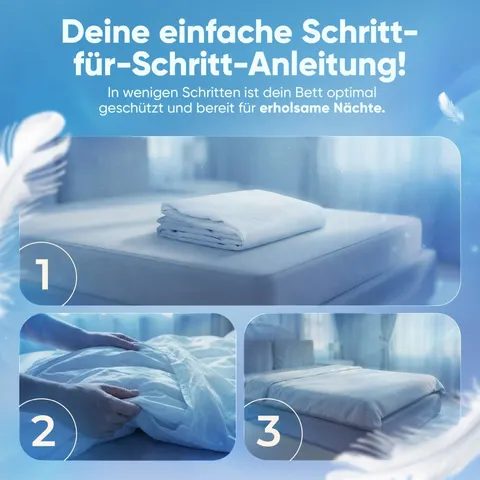
What are the differences between the fillings?
First and foremost, fillings differ in what they’re made of: animal hair, plant fibers, cellulose fibers from wood, feathers, or natural latex. Only then does warmth come into play, since the same filling is often available in both lightweight and winter-warm versions.
This table does not replace the product label: ingredients, sizes, and care instructions may vary by item.
| Filling | What It Is | As a comforter (duvet) | As a pillow |
|---|---|---|---|
| Alpaca | Alpaca hair. | Alpaca blanket: 190 to 500 g/m², up to warmth class 4. | Alpaca Pillow: Alpaca fleece, removable filling. |
| Camel hair | Camel hair. | Camel Hair Blanket: All-season and winter blanket. | Camel Hair Pillows: Camel hair balls, fill amount of your choice. |
| Virgin wool | Wool from a sheep's fleece. | Virgin wool blanket: All-season blanket, 1,000 g, 135 × 200 cm. | Virgin Wool Pillows: Sheep's wool balls, removable filling. |
| Swiss stone pine (Zirbe) | Virgin wool with Swiss stone pine shavings. | Swiss stone pine ceiling: 300 to 500 g/m², thermal classes 2 to 4. | Swiss stone pine pillow: virgin wool with Swiss stone pine shavings. |
| kapok | Plant fiber from the fruit of the kapok tree. | Kapok blanket: All-season blanket, made of 50% kapok and 50% cotton. | Kapok pillows: made of pure kapok or with cotton. |
| Hemp | Plant fiber: the bast fiber of the hemp plant. | Hemp blanket: All-season blanket according to the product page, 70% hemp, 30% cotton. | Hemp pillow: 70% cotton, 30% hemp. |
| Lyocell | Cellulose fiber from wood. | Lyocell blanket: Summer blanket, 400 g. | Lyocell Pillow: Filled with a blend of Lyocell and polyester fibers; filling can be adjusted. |
| Down | Goose or duck feathers. | Rubin Down Comforter: According to the brief description, it contains goose down; according to the product page, it is an all-season comforter with a "normal" warmth rating for bedroom temperatures of 16 to 18 °C. | Rubin Pillow: 85% duck down, 15% duck feathers, three compartments. |
| Latex flakes | Natural latex flakes. | No blankets in the product line. | Latex Flake Pillow: 100% natural latex flakes, fill height adjustable. |
The weights are listed as the store specifies them: for alpaca and Swiss stone pine, per square meter (g/m²); for virgin wool, as the filling for the entire blanket. Therefore, compare weights only within the same type of filling.
Before making a purchase, ask yourself these three questions:
- What's Included: Read the complete list of materials used in the filling and cover.
- How it feels: Weight, texture, fill volume, and quilting all affect how it feels when you lie on it and how warm it keeps you.
- To determine the proper care instructions: Compare the washing temperature, drying instructions, and care label for the specific item.
What the research says: There has been little research into whether a filling measurably improves sleep. A 2024 review identified nine studies and described the relationship between fiber and sleep as complex. In a study comparing bedding made of wool and polyester, no difference in sleep was observed.
What kind of filling helps if you sweat at night?
If you sweat at night, start by using a blanket that isn't too thick, and then choose a filling that absorbs and releases moisture.
Stiftung Warentest evaluates both aspects of comforters: how well they insulate and how much moisture they allow to pass through. Their advice: If you sweat easily and therefore tend to sleep on the cooler side, you’re better off with a comforter that provides less insulation.
At Mara Vital, these are the lightweight blankets: the Lyocell blanket, weighing 400 g, and the alpaca blanket, weighing 190 g per square meter. The product page states that the Lyocell blanket absorbs large amounts of moisture and releases it quickly. Öko-Test notes that sheep’s wool absorbs a lot of water vapor without feeling damp.
The room matters, too: In a sleep study, participants slept better at 17 °C than at 22 °C.

How do you wash and care for different types of fillings?
Washing instructions depend on the product, not the material: Hemp, Lyocell, and down comforters can be washed at 60 °C; kapok comforters at 40 °C; and virgin wool comforters are usually just aired out.
The table lists the information provided on the product pages in the Mara Vital online store. “According to the label” means: The page does not provide any information; the care label applies.
| Filling | Blanket | Pillow |
|---|---|---|
| Alpaca | according to the label | Washable cover |
| Camel hair | according to the label | Cover: 60 °C |
| Virgin wool | 30 °C, air out frequently | Cover: 60 °C |
| Swiss stone pine (Zirbe) | according to the label | Suitable for temperatures up to 60 °C |
| kapok | 40 °C | Cover: 60 °C |
| Hemp | 60 °C | up to 60 °C |
| Lyocell | up to 60 °C | up to 60 °C |
| Down | 60 °C | 60 °C |
| Latex flakes | no blanket | washable |
- Delicate cycle: Wash the hemp blanket, the hemp pillow, and the Lyocell blanket on the delicate cycle; do not spin-dry the Lyocell blanket. Also wash the covers of the virgin wool, Swiss stone pine, and kapok pillows on the delicate cycle.
- Drying: Dry the kapok blanket in the dryer and finish drying it in the open air. The hemp blanket should not go in the dryer—hang it on a clothesline instead—and the Lyocell blanket should be air-dried. The Lyocell pillow, the Rubin down blanket, and the Rubin pillow can go in the dryer.
- Virgin wool blanket: Airing it out is usually sufficient; avoid direct sunlight. If necessary, wash at 30 °C with wool detergent, at a maximum of 800 revolutions, without fabric softener. According to the product page, it’s best to take heavy and large blankets to a professional cleaner.
- Pillows: The outer cover of the alpaca pillow is removable and machine-washable. A kapok pillow filled with pure kapok is not washable; one filled with a blend of kapok and cotton should be washed gently by hand. According to the product page, both the cover and the filling of the latex flake pillow are washable.
The instructions differ for virgin wool: The product page for the virgin wool blanket specifies 30 °C with wool detergent, while Öko-Test states that natural sheep’s wool is not machine-washable. Always follow the care label on your blanket.
Air them out between washes: According to aha! Swiss Allergy Center, you should air out your blanket, pillow, and mattress in the morning before making the bed.
Which filling goes best with which season?
It’s not so much the filling as its weight that suits the season: Mara Vital offers alpaca, camel hair, and virgin wool with Swiss stone pine in several warmth levels. The Lyocell blanket is a summer blanket weighing 400 g; according to their product pages, the hemp blanket, the kapok blanket, and the virgin wool blanket are all-season blankets.
- Summer: the 400-gram Lyocell blanket and the lightweight options: the alpaca blanket weighing 190 or 300 grams per square meter, and the Swiss stone pine blanket in warmth class 2.
- Transitional and all-season: the kapok blanket, the hemp blanket, the virgin wool blanket, the camel hair blanket (as an all-season blanket), the alpaca blanket, and the Swiss stone pine blanket, all in warmth class 3, each weighing 400 grams per square meter. Also included is the Rubin down blanket, which, according to the product page, is an all-season blanket in the “normal” warmth class.
- Winter: the alpaca blanket and the Swiss stone pine blanket, both in heat class 4 and weighing 500 g per square meter, and the camel hair blanket as a winter blanket. Whether you also need a summer blanket depends on your bedroom: see the “Alpaca” section for more information.
According to Stiftung Warentest, warmth classes are not uniformly defined. The organization determines warmth levels itself in the laboratory—at 23 °C and 50% humidity—using a heated copper plate, and thus verifies which blankets meet the specified warmth class. For feather and down comforters, Class 3 is defined by the State of Hesse’s consumer portal as a winter comforter; for the Mara Vital alpaca comforter, thermal class 3 refers to an all-season comforter; and the Rubin down comforter lists its class as “normal.” Therefore, be sure to compare the fill weight and the information on the product page.
Then there’s the room temperature: The Rubin down comforter’s product page recommends a bedroom temperature of 16 to 18 °C. A cool room promotes good sleep, as demonstrated by a sleep study (more under “If You Sweat at Night”), and this is also confirmed by the Federal Office of Public Health (FOPH); however, at temperatures below 18 °C, moisture can condense on cooler walls and window frames and lead to mold growth, especially in poorly insulated homes and when the bedroom door is left open. If you have a dust mite allergy, the aha! Allergy Center Switzerland advises against heating the bedroom to more than 20 °C.
Who is alpaca suitable for?
Alpaca is a good choice if you're looking for a soft, lightweight blanket made from animal hair and want to choose the level of warmth based on the fill weight.
Alpaca is the hair of the alpaca. According to the product page for the alpaca blanket, the material regulates temperature fluctuations. The page describes the fiber as hollow: it retains body heat and wicks away moisture. According to the page, alpaca contains no wool grease (lanolin); when measured, very little is present: freshly sheared alpaca fiber loses only 5 to 25% of its weight when washed—including dust, plant matter, wax, and grease—while merino wool loses about half.
- As a blanket: The Mara Vital alpaca blanket is available in four weights: 190 or 300 grams per square meter for warm nights, 400 grams as an all-season blanket (heat class 3), and 500 grams as a duo blanket for winter (heat class 4). The cover is made of cotton batiste.
- For Summer and Winter: According to Öko-Test, whether you need a summer blanket and a winter blanket depends on your bedroom: If it stays the same temperature all year round, one blanket is enough. Otherwise, go with two alpaca blankets: the one weighing 190 g per square meter for summer and the “Duo” blanket weighing 500 g for winter. “Duo” means double-layered, which is how the magazine describes these blankets; the lighter weights are listed as “Mono” on the product page.
- As a pillow: The alpaca pillow is filled with alpaca fleece. The filling can be removed through the zipper on the inner cover.

Camel hair or sheep's wool: Which is warmer?
A blanket's warmth is determined more by its thermal rating than by the type of fiber. Our sources do not provide a measurement that compares the two fillings at the same weight.
- Camel hair: A classic choice for winter comforters, also available in lightweight versions for year-round use. Öko-Test describes it as very light and soft, even more supple than virgin merino wool: It cools or warms as needed and regulates moisture particularly well, making it ideal for year-round comforters.
- Sheep's wool: The all-around choice for year-round use. According to the same test, its fluffy fibers consist largely of air: Body heat stays under the blanket without causing it to get stuffy. Wool absorbs a lot of water vapor without feeling damp and releases moisture faster than cotton.
- Which one keeps you drier: Both absorb moisture and release it again. The test does not indicate which of the two keeps you drier.
- Here's how to choose: Go for camel hair if you want warmth. Mara Vital's camel hair blankets are available as all-season and winter blankets, and the hair isn't sheared—the animals shed it naturally. Choose sheep's wool if you want a blanket that will last all year round: the virgin wool blanket is an all-season option.

What is virgin wool, and is it the same as sheep's wool?
Virgin wool is sheep's wool—specifically, new wool: According to EU textile labeling regulations, only wool that has never been used in a finished product and has not been damaged by either treatment or use may be called "virgin wool."
"Sheep's wool" is the broader term: wool is the fiber from a sheep's fleece. Öko-Test states that virgin wool may only be obtained from live animals. At Mara Vital, the sheep's wool blanket is called the "virgin wool blanket."
- As a blanket: The Mara Vital virgin wool blanket is made of 100% merino virgin wool and is a year-round blanket with a 1,000-gram fill, measuring 135 × 200 cm.
- As a pillow: The virgin wool pillow is filled with balls of sheep's wool. After a long period of use, the filling can be replaced with new virgin wool.

What are the benefits of Swiss stone pine in blankets and pillows, and is Swiss stone pine the same thing?
Swiss stone pine and Zirbe are two names for the same tree, and in the blanket and pillow, its wood imparts a distinctive scent: Both are filled with virgin wool mixed with Swiss stone pine shavings.
The wool provides warmth and moisture regulation, while the scent comes from the wood. Many find it soothing, though that is a matter of personal preference.
What has not been proven: that Swiss stone pine wood improves sleep. “Medizin transparent,” a project by Cochrane Austria, found only one small study on this topic: 15 people slept in beds made of Swiss stone pine wood and particleboard. The sleep questionnaires showed no difference, and the heart rate was less than three beats per minute lower in the Swiss stone pine bed. The study did not examine pillows and blankets filled with wood chips.
- As a blanket: The Mara Vital Swiss stone pine blanket is made of 100% virgin wool with Swiss stone pine shavings and is available in warmth classes 2 through 4, ranging from 300 to 500 grams per square meter.
- As a pillow: The Swiss stone pine pillow—also called an "Arven" pillow in the store—is filled with virgin wool and Swiss stone pine wood shavings.

What is kapok?
Kapok is a plant fiber: the fiber found inside the fruit of the kapok tree (Ceiba pentandra).
The fiber has a thin cell wall and a large cavity that contains up to 80% air. That is why it is very light. Water beads up on its waxy coating.
- As a blanket: The Mara Vital kapok blanket is an all-season blanket, filled half and half with organic kapok and organic cotton.
- As a pillow: With kapok pillows, you can choose between pure kapok or a blend with cotton.

Who is hemp a good choice for as a filling?
Hemp is a great choice if you're looking for a plant-based blanket: The Mara Vital hemp blanket is fully machine-washable.
Hemp is the bast fiber of the hemp plant (Cannabis sativa). The fiber is sturdy. The product page for the hemp pillow describes it as moisture-regulating.
Hemp can be mixed with cotton as a filling.
- As a blanket: The Mara Vital hemp blanket is made of 70% hemp and 30% organic cotton and contains no animal fibers. According to the product page, it is a year-round blanket.
- As a pillow: In the hemp pillow, the ratio is reversed: 70% cotton, 30% hemp.

What is Lyocell, and what is Tencel?
Lyocell is a cellulose fiber made from wood: The cellulose is dissolved and spun into fiber using an organic solvent, according to the EU textile labeling regulations. Tencel, written as TENCEL™, is a brand name owned by Lenzing under which Lyocell is marketed.
In the Öko-Test study, blankets made of Lyocell or a blend of Lyocell and polyester outperformed polyester blankets in terms of moisture regulation; wool was not included in the test. According to the product page, the Lyocell blanket absorbs large amounts of moisture and releases it quickly.
- As a blanket: The Mara Vital Lyocell blanket is filled with 100% Lyocell, which is derived from eucalyptus wood. It is available as a lightweight summer blanket weighing 400 g. Mara Vital markets it as a Lyocell blanket, not under the name Tencel.
- As a pillow: The Lyocell pillow has a fiber filling made of Lyocell and polyester, which you can adjust as needed.

When is down the right choice, and what are the alternatives?
Down is a good choice if you want something warm and soft. According to Öko-Test, down and feathers don’t wick away moisture very well: If you sweat under a down comforter, a lighter blanket—such as a 400-gram Lyocell blanket made from plant-based fibers—is a good alternative.
Down is lighter and softer than feathers and provides better insulation. According to the same source, how warm a blanket is depends primarily on the air it traps: no one material is inherently superior to another.
- As a comforter: According to the product description, the “Rubin” down comforter by Hans Kruchen, available in the Mara Vital store, is filled with goose down. Its product page lists it as an all-season comforter with a “normal” warmth rating.
- As a pillow: The Rubin pillow contains 85% duck down and 15% duck feathers in three chambers.
According to three studies, down bedding does not appear to be at a clear disadvantage for people with dust mite allergies; for more information, see “Down and Dust Mites.” As with any type of filling, the most important factor is a dust-mite-proof cover: see “Which Filling Is Right for Your Needs?”

What are latex flakes?
Latex flakes are shredded natural latex from the rubber tree and are primarily used as pillow filling. They are used as blanket filling only in specialized designs.
- As a pillow: The Mara Vital latex flake pillow is filled with 100% natural latex flakes, and the cover is made of cotton. The flakes are loose inside the pillow: If you remove some, your head will rest lower; if you add more, the pillow will provide more support.
- If you have a latex allergy: Avoid this filling. The aha! Allergy Center Switzerland advises those affected to replace items containing latex with latex-free alternatives.
To go with it
Latex flake pillow
A pillow whose height you can adjust yourself: 100% natural latex flakes in a cotton cover; the filling can be removed and refilled.
View Pillows
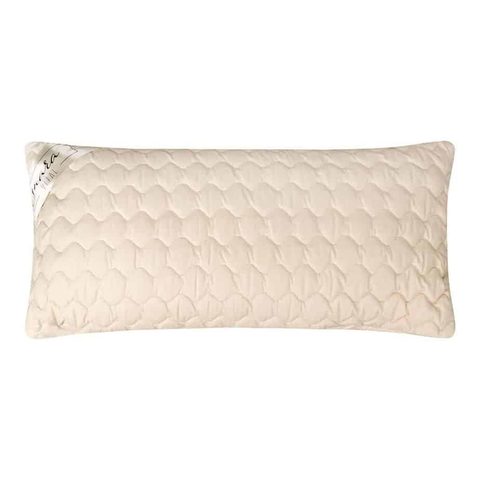
Is molton also a type of filling?
No: Molton is a fabric, not a filling. In the Mara Vital store, you'll find it as a protective cover for your mattress: as a mattress topper, as a fitted sheet, and—with a waterproof coating on the underside—as a waterproof mattress pad.
The Mara Vital Natur Molton Mattress Protector is made of 100% cotton. According to the product page, it absorbs a lot of moisture and protects the mattress from sweat and dirt, but it is not waterproof.

Conclusion
Choose the filling based on your needs and the warmth level based on the fill weight. If you tend to sweat, choose a lightweight blanket like the Lyocell blanket (400 g) or the alpaca blanket (190 g per square meter). If you feel cold, choose the alpaca or Swiss stone pine blanket in warmth class 4 (500 g per square meter). If you have a dust mite allergy, opt for mite-proof covers like the hypoallergenic duvet cover and a blanket that can withstand 60 °C, such as the hemp, Lyocell, or Rubin down blanket. Whether you choose animal hair or plant fibers is a matter of personal preference; follow the care label instructions when washing. You can find all the blankets and pillows in the Mara Vital shop under “Duvets and Pillows.”
Frequently Asked Questions
Vegan and warm: Is that possible?
For year-round use, yes: Mara Vital’s kapok blanket—half kapok and half cotton—and its hemp blanket are both filled with plant-based materials; according to their product pages, both are all-season blankets. The Lyocell blanket is available as a summer blanket weighing 400 g.
Is wool really self-cleaning?
Öko-Test attributes a high level of self-cleaning power to natural sheep's wool. Lanolin and the fiber structure help prevent odors from forming: Regular airing is often sufficient, and washing is rarely necessary.
Which natural blanket won a test?
None in the 2026 Stiftung Warentest review: The organization tested only blankets with synthetic fiber fillings—17 all-season blankets—and none made with wool, down, or plant fibers. Öko-Test tested 15 natural comforters in 2015. Therefore, compare the information provided on the product page: filling, fill weight, warmth rating, and care instructions, as shown in the table. What distinguishes the different fillings? The Mattress Test guide explains how to interpret a test rating.
Can I return a duvet if it's too warm?
Yes, within 14 days: According to Mara Vital’s Terms and Conditions, you can cancel your purchase within 14 days without giving a reason, and Mara Vital will pick up the merchandise at its own expense. The 100-day trial period mentioned in the Terms and Conditions applies to mattresses. The Matratzentest guide explains what applies to online purchases in Switzerland.

Author
Sources
- Stiftung Warentest: Duvets Put to the Test (2026, 17 duvets with synthetic fiber filling): Moisture per night, warmth ratings, and how they are measured; which duvet is best for when you sweat or feel cold
- Öko-Test: 15 Natural Duvets Put to the Test (2015): Properties of Sheep's Wool, Virgin Wool, and Camel Hair
- Regulation (EU) No. 1007/2011, Article 8: What “virgin wool” May Be Called in the EU
- Regulation (EU) No. 1007/2011, Annex I, German version in the Official Journal: the fiber names wool, alpaca, camel, kapok, hemp, and lyocell
- Zheng et al.: Kapok Fiber as an Absorbent Material (J Environ Sci 2015): Structure of Kapok Fiber
- Purnawati et al.: Physical and Chemical Properties of Kapok and Balsa Fibers (J Korean Wood Sci Technol 2018): the wax layer of kapok fiber
- Cárdenas-Oscanoa et al.: Lightweight Natural Fiber Insulation Boards Produced with Kapok Fiber (Global Challenges 2025): the air content of kapok fiber
- Quispe Peña, Poma Gutiérrez, Purroy Unanua: Revista Complutense de Ciencias Veterinarias 7:1 (2013): Fat Content of Alpaca Fiber
- Öko-Test: Choosing the Right Duvet—Down, Feathers, or Wool (2020): Washing and Drying Down, Down and Moisture, Double-Layer Duvets
- Öko-Test: Synthetic-Fiber Duvets Put to the Test (2021): The Right Length, Summer and Winter Duvets
- Li, Halaki, Chow: "Sleepwear and Bedding Fiber Types and Sleep Quality " (J Sleep Res 2024): A review of nine studies
- Shin et al.: Fabric for sleepwear and bedding at 17 and 22 °C (Nat Sci Sleep 2016): Wool or polyester bedding; sleep at 17 and 22 °C
- Rains et al.: Mite allergens in new synthetic and feather pillows (Clin Exp Allergy 1999): Mite allergens in feather and synthetic pillows
- Glasgow et al.: Feather bedding and childhood asthma (Arch Dis Child 2011): Feather bedding in children with asthma
- Halley et al.: Bedding Materials and Early Infant Wheezing (Pediatr Allergy Immunol 2025): Sleeping bags made of synthetic materials, wool, or feathers for toddlers
- Swiss Federal Research Institute WSL on waldwissen.net: The Swiss Stone Pine, A Profile of a Mountain Forest Tree: "Arve" and "Zirbe" as Names for *Pinus cembra*
- Lenzing: 2025 Annual Report, Fiber Division: TENCEL™ as the Brand for Lyocell Fibers
- Transparent Medicine: Does Swiss Stone Pine Wood Improve Sleep? The Study on Swiss Stone Pine Wood Beds and Its Validity
- aha! Swiss Allergy Center: Dust Mite Allergy: Mite-Proof Covers for Mattresses, Pillows, and Duvets
- aha! Swiss Allergy Center: 10 Tips for Combating Dust Mites: Wash pillows and comforters at 60 degrees, air out the room in the morning, and keep the bedroom temperature below 20 degrees
- aha! Swiss Allergy Center: Latex Allergy: Replace Items Containing Latex
- Hesse Consumer Information: Choosing the Right Duvet (as of March 2025): The Four Warmth Ratings for Feather and Down Duvets, Duvet Length
- Zallmann et al.: "Debunking the Myth of Wool Allergy " (Acta Derm Venereol 2017): the wool fiber as an allergen
- Silverberg et al.: Lanolin Allergic Reactions (Dermatitis 2022): Skin Tests for Lanolin
- Federal Office of Public Health (FOPH): Proper Ventilation and Heating: Bedrooms Below 18 °C and Mold
- aha! Swiss Allergy Center: Protecting Yourself from Dust Mites: Mattress Covers and the Allergy Seal of Approval
- Mara Vital: Terms and Conditions and Customer Information: 14-day return policy, 100 days for mattresses
- Mara Vital: Allergy-Friendly Duvet Cover: Product Information
- Mara Vital: Alpaca Blanket: Product Information
- Mara Vital: Alpaca Pillows: Product Information
- Mara Vital: Camel Hair Blanket: Product Information
- Mara Vital: Virgin Wool Blanket: Product Information
- Mara Vital: Virgin Wool Pillows: Product Information
- Mara Vital: Swiss Stone Pine Pillows: Product Information
- Mara Vital: Swiss Stone Pine Blanket: Product Information
- Mara Vital: Kapok Blanket: Product Information
- Mara Vital: Kapok Pillows: Product Information
- Mara Vital: Hemp Blanket: Product Information
- Mara Vital: Hemp Pillows: Product Information
- Mara Vital: Lyocell Blanket: Product Information
- Mara Vital: Lyocell Pillows: Product Information
- Mara Vital: Latex Flock Pillows: Product Specifications
- Hans Kruchen: Rubin Down Comforter: Information from the product page in the Mara Vital online store
- Hans Kruchen: Ruby Pillow: Information from the product page in the Mara Vital store
- Mara Vital: Natural Molton Mattress Protector: Product Information
Consulting
If you have any questions or would like advice about our products, you can contact us directly at any time.
- Phone 041 440 86 86
- Email info@mara-vital.ch
- WhatsApp 079 841 86 86
Read more
-

Mattress for Side Sleepers
Which mattress is best for side sleepers, and why the pillow plays a key role.
-

Cleaning a Mattress
Step by step and spot by spot, if something does end up on the mattress.
-

Mattress Protectors: Molton, Waterproof, or Encasing?
Which mattress protector is right for your needs.
-
XXL Mattresses
Plan for extra length and width: sleeping surface, distance to the headboard, and the distance to the installation site.


