
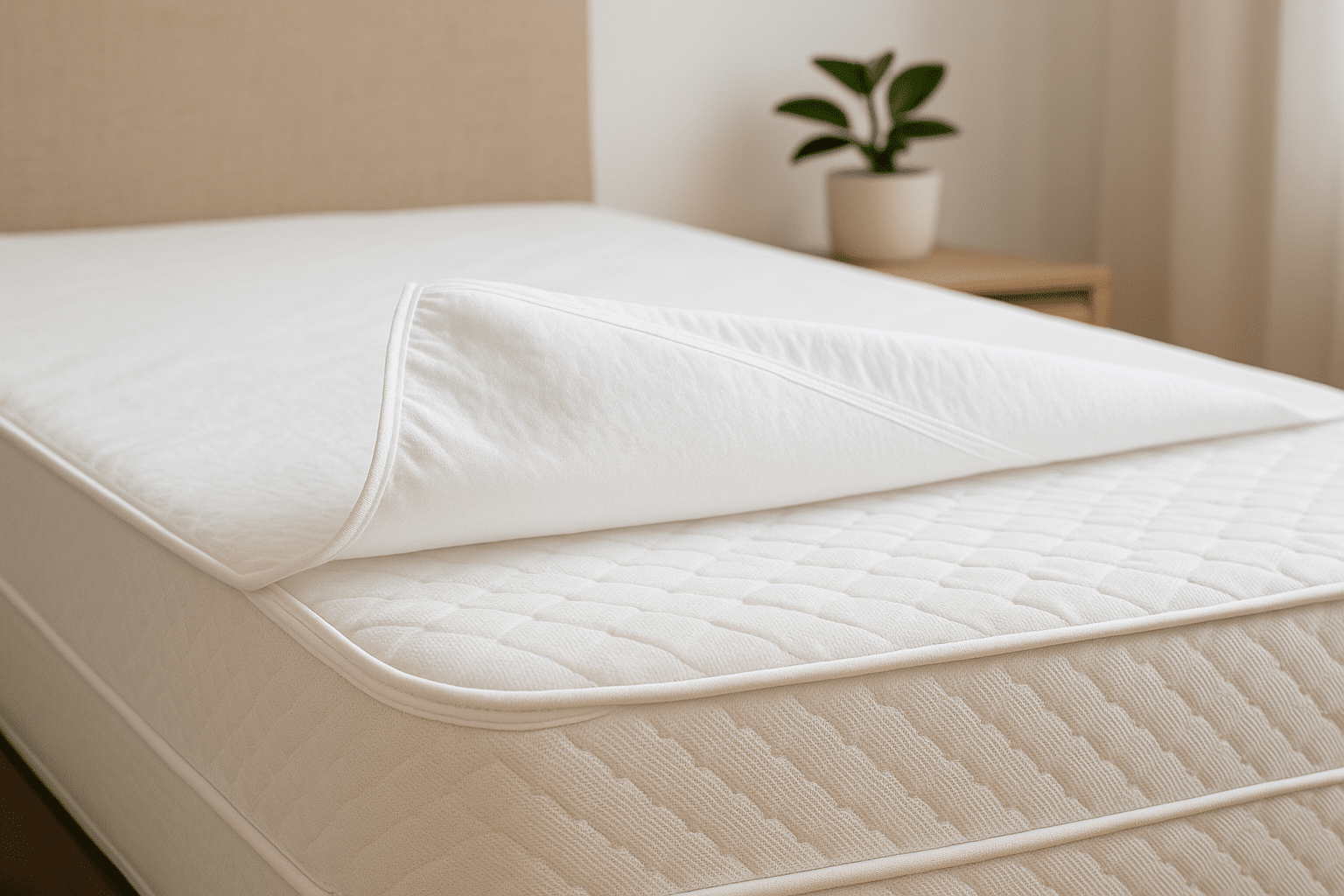
A high-quality mattress is an investment in restful sleep. To ensure it stays hygienic and retains its shape for years to come, it’s worth adding an extra layer of protection. A waterproof mattress protector prevents liquids, sweat, or stains from seeping into the mattress core. In this article, you’ll learn why mattress protectors are so important, what different types are available, and which one best suits your needs.
Why a waterproof mattress protector is important
Many people underestimate just how much wear and tear a mattress undergoes in everyday life. Every night, we lose moisture through sweating, and on top of that, there’s dead skin cells, dust, and, in the worst case, spilled drinks. Without protection, all of this seeps into the mattress—and that’s exactly what a waterproof mattress protector prevents. It ensures better hygiene, extends the mattress’s lifespan, and creates a healthier sleep environment.
- Hygiene: Sweat and stains do not penetrate the mattress.
- Durability: The mattress stays like new for longer.
- Health: Protection against dust mites and allergens.
- Convenient: The cover is easy to remove and washable.
Types of waterproof mattress protectors
Mattress protectors come in a variety of styles. They differ in material, construction, and level of protection. Below, we’ll introduce you to the most common types.
Mattress protector with a PU membrane
This style is particularly popular because it combines two advantages: reliable waterproofing and breathability. The outer layer is usually made of cotton or terry cloth, while the inner layer features a thin polyurethane membrane . This blocks liquids but allows air to pass through, preventing heat buildup.
- Advantages: Waterproof, breathable, quiet, and comfortable to lie on.
- Ideal for: families, cribs, or everyday use.
Molton mattress protector
Molton pads are made of tightly woven cotton that has been brushed, making them highly absorbent. Many styles also feature a coating that helps them repel liquids more effectively. The material feels soft and natural, but is less stretchy than jersey.
- Advantages: Durable, absorbent, and soft to the touch.
- Disadvantages: May reach its limits when handling very large amounts of liquid.
Waterproof mattress protector with elastic corners
The simplest type consists of mattress protectors that are secured at the corners with elastic bands. They lie directly on the mattress and are quick to change. However, they only protect the sleeping surface and can slip out of place more easily.
- Advantages: Easy to use, affordable, quick to wash.
- Disadvantages: No side protection; may slip.
Mattress protectors with side panels
These mattress protectors work like fitted sheets: they cover not only the top but also the sides of the mattress. This ensures they stay securely in place and provide enhanced protection against dirt and spills.
- Advantages: All-around protection; fits smoothly and securely.
- Ideal for: households with pets or for everyday use.
Encasing – fully encased mattress protectors
An encasing completely encloses the mattress and is secured with a zipper. This solution offers the highest level of protection against liquids, dust mites, and allergens. It is particularly suitable for people with allergies or those who require care.
- Advantages: Maximum protection, ideal for people with allergies.
- Cons: Slightly more complicated to use, higher price.
Which mattress protector is right for your needs?
Every household has different needs. That’s why it’s worth taking the time to consider which option is the best choice for you:
- Families with children: PU membrane or side-sealed liners for reliable protection against minor accidents.
- Pet owners: Models with side panels or enclosures to keep out hair and dirt.
- For allergy sufferers: A zippered mattress cover that reliably keeps dust mites and allergens out.
- Guest rooms: Rubber corner protectors—an affordable and practical solution.
- Care instructions: Fully lined pants for maximum protection against moisture.
Mattress Protector Comparison Chart
| Type | Protection level | Comfort | Suitable for |
|---|---|---|---|
| PU membrane | High | Very good, quiet | Families, Everyday Life |
| Molton | Medium | Soft, natural | Natural feel |
| Rubber corners | Medium | Practical | Guest rooms, cribs |
| Enclosed on the sides | Very high | Comfortable | Families, Pets |
| Encasing | Maximum | Good | People with allergies, people requiring care |
FAQ on Waterproof Mattress Protectors
Are waterproof mattress protectors breathable?
Yes, modern PU membranes are microporous. This means that air and water vapor can circulate, but liquids cannot penetrate.
Can mattress protectors be washed?
Most protectors are machine washable at temperatures ranging from 60°C to 95°C, and some are even dryer-safe. This ensures good hygiene and easy care.
Do they feel “plastic-like”?
That’s not the case with high-quality models. They’re quiet, soft, and barely noticeable under the fitted sheet.
Which mattress protector is best for people with allergies?
A fully enclosed, zippered encasing offers the most reliable protection against dust mites and allergens.
Conclusion – the right mattress protector for you
A waterproof mattress protector is more than just an accessory—it protects your mattress, improves hygiene, and can help prevent allergies. For everyday use, PU membrane protectors or models with side panels are an excellent choice. People with allergies and those requiring care benefit most from an encasing. If you’re looking for a simple solution for guests or children, a fitted sheet with elastic corners is a good option. This way, you’ll find the protection that perfectly suits your lifestyle—and ensure many years of healthy, hygienic sleep comfort.


